
Supply Chain Mapping for Fashion SMEs: EU Compliance
Learn how small fashion brands can map supply chains for EU compliance using simple, proven frameworks - no costly software or large teams required.
11/1/20254 min read

Mapping Supply Chains for EU Compliance: Where Small Brands Can Start
For small fashion brands, mapping a supply chain can feel like staring at a foggy map, the fabric mills are two steps removed, the dye house is “somewhere in Turkey,” and the pattern room insists the trims come “from a trusted source.”
Yet this is exactly the visibility the EU is now requiring.
Regulations, the Ecodesign for Sustainable Products Regulation (ESPR) and the upcoming Digital Product Passport (DPP), will force brands to trace, verify, and disclose who made their products and how.
For small and medium-sized enterprises (SMEs), this isn’t just compliance work. It’s a step toward resilience, knowing who you depend on, how they operate, and where your business could break.
What the EU Expects
By 2030, all textile products placed on the EU market will need documented traceability down to at least Tier 3 suppliers - covering raw materials, processing, and manufacturing.
The ESPR and the EU Textile Strategy require brands to collect and share supplier data through the Digital Product Passport (DPP), a product record that includes origin, materials, and repairability information.
In short, transparency will no longer be optional.
What Supply Chain Mapping Really Means
Mapping isn’t the same as auditing.
It’s not about inspecting a supplier’s books or demanding compliance certificates. It’s about building a visual, factual chain of custody for your products:
Where each component comes from.
Who handles it at each production stage.
Which materials, chemicals, or processes are used.
The goal is to know, and be able to show, how your product moves from fibre to finished garment.
Start With What You Control
Most SMEs already have data at hand, but never organise it systematically.
Purchase orders, shipment records, and product specs can form the starting map.
The OECD Due Diligence Guidance for Responsible Supply Chains in the Garment and Footwear Sector suggests identifying at least your Tier 1 (direct) and Tier 2 (material or dye) suppliers first, then working backwards through basic questionnaires and documentation requests.
This forms the foundation for your traceability structure - even without new software or costly audits.
Practical Mapping Frameworks for SMEs
Several non-software frameworks are recognised across EU-funded projects and industry networks.
1. The Higg Facility Identification (ID) System
Part of the Sustainable Apparel Coalition, this tool doesn’t require paid software access. It provides a standardised global database for facility IDs, helping brands track Tier 1–3 suppliers consistently across shared networks.
2. Step-by-Step Mapping Process by Fair Labour Association
It provides a simple process: starting with objectives and scope, identifying actors, identifying entry points, defining data points and tools, then collecting Tier 1 data and mapping deeper Tiers.
The goal isn’t perfection but traceable logic. You shouldn't expect to map your entire supply chain immediately, instead you should focus on high-risk materials and regions and build depth gradually.
3. The UN/CEFACT Traceability Framework
Used in the CIRPASS and TRUST EU pilot projects, this model defines traceability as a flow of verified data exchanges between suppliers, supported by unique product identifiers.
It’s designed to align with future DPP requirements without requiring blockchain or digital platforms.
How to Prioritise When You Have Limited Leverage
Small brands rarely have the power to demand full traceability from suppliers.
But the European Commission and OECD agree that SMEs can still make progress by focusing on “critical risk areas”, materials and processes most likely to involve human rights or environmental concerns.
Start with:
Cotton, viscose, or polyester sources (high-risk for origin and labour).
Dyeing and finishing units (high-risk for chemicals and wastewater).
Packaging suppliers (often overlooked but easy to trace).
By mapping these first, you meet due diligence expectations while showing proportional effort.
Keep It Simple, Document Everything
Mapping doesn’t need new digital systems.
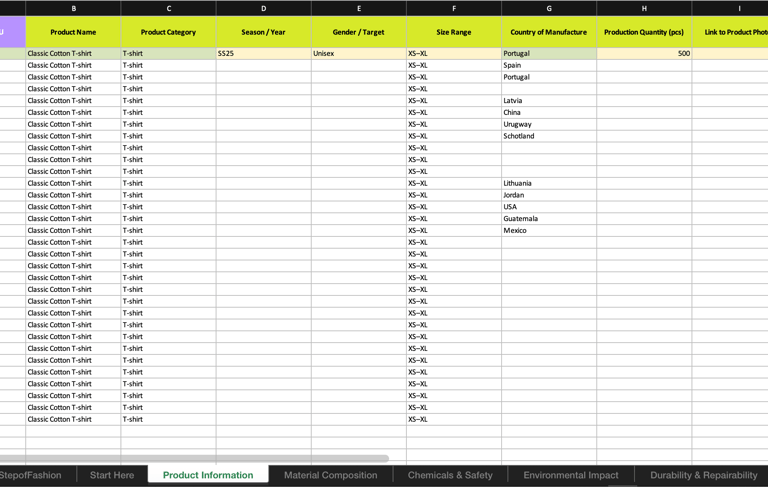
What matters most is documentation, invoices, certifications, email confirmations, and country-of-origin data.
The European Apparel and Textile Confederation (EURATEX) encourages SMEs to adopt a “minimum viable traceability model” - a basic record of supplier names, countries, and materials that can later feed into the DPP.
This model is being tested through the ReHubs and TRUST initiatives funded under Horizon Europe, which aim to create open, low-cost data standards for textile SMEs.
Example: ASKET (Sweden)
ASKET, a small menswear brand, publishes a full supply chain traceability map for every garment on its website.
Each product lists the country, facility name, and role (weaving, dyeing, sewing).
This case has been referenced in EU discussions on traceability as proof that small brands can lead with transparency rather than budget size.
Example: Christy Dawn (US) Farm to Closet Project
Christy Dawn is a California-based independent fashion brand known for its regenerative “Farm-to-Closet” initiative. In partnership with the Oshadi Collective in southern India, the brand traces its garments from Tier 5 cotton farms through ginning, spinning, weaving, dyeing, and sewing - achieving full visibility across every production stage. By restoring soil health and documenting each step, Christy Dawn demonstrates how small labels can reach deep supply-chain traceability while creating positive ecological and community impact.
Both cases show that transparency doesn’t need to be perfect, it needs to be credible and evolving.
What the Future Requires
By 2027, supply chain mapping will connect directly to product-level reporting.
Under the Digital Product Passport, brands will need to disclose:
Supplier identifiers (Tier 1–3).
Country of origin for each material.
Evidence of due diligence for high-risk tiers.
Links to repair, recycling, and waste management data.
This will turn traceability into a shared language across Europe. Brands that start collecting structured supplier data now will be better positioned to integrate into DPP systems without scrambling later.
Why This Matters for You
Mapping the supply chain is not about punishment, it’s about protection.
When you know who makes your products, you can act faster when rules, materials, or market access change.
The European Commission’s SME Impact Assessment confirms that traceability reduces compliance costs long-term by cutting data duplication and simplifying reporting across EPR, DPP, and due diligence rules.
For small brands, this visibility becomes leverage, not through power, but through preparedness.
the Next Step of Fashion
Transforming fashion businesses for sustainability.
Contact
NEWSLETTER
© 2026. All rights reserved.