
Build EU Compliance Routines With Small Team Power
Small fashion teams can meet EU data rules by sharing tasks, setting simple routines, and planning early. Clear roles, supplier info, and one shared source of truth drive progress.
12/2/20254 min read


Aligning Your Team for EU Fashion Data Rules and Starting Compliance With Limited Resources
We are entering a phase where product data is no longer nice to have. Europe expects fashion companies to track and prove what they make, how they make it, and what happens after. Digital Product Passports, due diligence, recycled content information, waste reporting, and proof behind environmental statements all point in one direction: shared, reliable information that flows through design, sourcing, and logistics.
For a small fashion company, that can sound like a lot. We see it differently: with a simple structure and clear communication, even a small team builds momentum. We keep it real - many small brands don’t have dedicated compliance roles or advanced systems, and that’s okay. What matters now is creating a rhythm, assigning ownership, and starting early.
These rules demand data across the product lifecycle, meaning design notes, material content and repair details, sourcing gathers supplier and origin data, and logistics handles transport, packaging, and waste information. No single person can do this alone.
The shift to shared responsibility
Older compliance might have sat with one person. That era is ending. A Digital Product Passport for textiles will require material breakdown, recyclability information, supplier details, facility data, and packaging inputs. Extended Producer Responsibility means you track products into end-of-life systems and report volumes and waste flows. Green claims rules mean you need proof behind every environmental statement.
Nothing about that works in silos.
We keep hearing brands say, “I didn’t realise design needed to know recycling rules,” or “logistics didn’t know we had to record packaging weights.” This is where structure comes in early, so no one scrambles later.
Where most SMEs feel pressure
Small brands are stretched across roles, juggling daily tasks and regulatory change without heavy infrastructure. Costs, supplier leverage, and fragmented data are real barriers.
We also see habits shaped by years of reacting rather than planning. Legacy fashion ran on fixing issues when they surfaced, or collecting minimal data on direct suppliers. New rules flip this - they reward preparation, supplier visibility, and product information captured from the start.
The encouraging part: the EU knows SMEs need help. Support, simpler procedures, and funding are built into the roadmap for small brands.
Start by assigning a lead - not a department
We like starting small and consistently. We suggest designating a compliance “champion” who spends weekly time gathering regulatory updates and sharing them internally. Sometimes it’s the founder, sometimes the product lead and sometimes it's done by outsourcing to professionals like us.
This isn’t adding complexity - it’s avoiding surprises.
They follow industry newsletters and the Global Fashion Agenda’s policy matrix, look at law firm summaries, and scan fashion-policy webinars hosted by platforms like TexTracer.
We often say: a few hours per month now saves panic later.
Bring your people together early
Once someone tracks updates, they don’t hold it alone. We recommend a small cross-team working group - design, sourcing, logistics, maybe marketing, if you talk about sustainability. Two short meetings per month can change everything.
This group clarifies who records fibre content, who collects supplier audits, who tracks packaging data, and who uploads repair information for future DPP use.
We sometimes frame it like this:
Design owns product data (materials, durability, repair notes)
Sourcing owns supplier and certifications
Logistics owns packaging, transport, waste data
Clearly define compliance responsibilities across functions,” so everyone knows their part.
Add compliance to day-to-day work
Not as a separate project - as a habit.
🟣Design adds fields to tech packs for composition, care, repair, and recyclability. They watch material choices against future restrictions. A simple checklist before sign-off prevents reworking styles later.
🟣Sourcing treats data collection as standard procurement - supplier locations, certifications, audit dates, risk checks. Even a self-assessment when a full audit is out of reach shows diligence.
🟣Logistics starts tracking packaging type and weight, transport modes, and planning for take-back programs tied to EPR. No destruction of unsold goods - donations and recycling instead.
And all of it lands in one shared file - a simple “single source of truth” for compliance data.
Your roadmap doesn’t need to be fancy
Start by listing the rules that apply to your business and when they take effect: DPP by 2027, EPR in 2025 in many countries, marketing proof rules, packaging rules, and phased due diligence expectations.
Then do a quick gap review:
What data do we already collect?
What’s missing?
Who should own it?
Prioritise by timing and impact - focus first on actions that support many rules, like traceability and supplier mapping.
Then document (even lightly) how your team will handle design checks, supplier onboarding, data storage, and regular reviews.
We like to push continuous refinement - review every six months, adjust for policy updates, and celebrate progress to keep momentum.
Use help - it’s there
Tools offer free guides and webinars like Retraced, TrusTrace and others.
Associations and networks share updates and knowledge, like GFA’s policy hub.
Some brands even reach out to authorities for clarification. Documenting guidance helps you show good-faith cooperation if asked later.
Why does doing this early help your brand
Early preparation reduces cost, avoids stress, and builds customer trust.
When a brand shares its journey - preparing for ecodesign, planning take-back programs, collecting supplier data - customers root for them. Many will even return garments for recycling and share longevity feedback that feeds your data.
Small steps, consistently.
That’s how small brands meet EU data rules and use them to run sharper operations, collaborate better with suppliers, and strengthen their market story - even without big budgets.
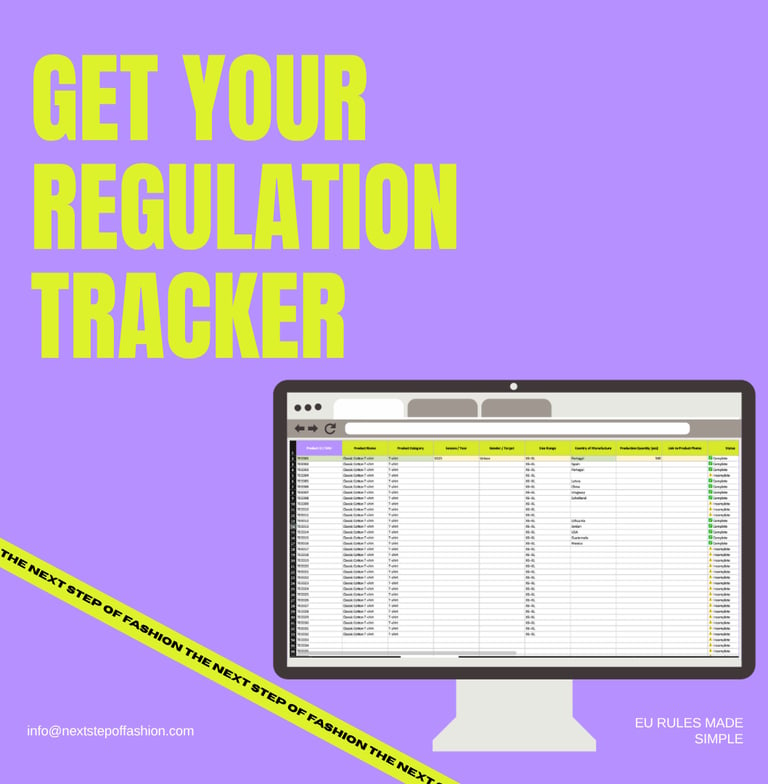
We Created a EU Regulatory Tracker Just for You
Because compliance shouldn’t feel like a fog.
With the right structure, it becomes manageable - even empowering.
And small brands like yours deserve tools that meet them where they are.
the Next Step of Fashion
Transforming fashion businesses for sustainability.
Contact
NEWSLETTER
© 2026. All rights reserved.